Have you ever felt completely confused in a new place, unsure where to go next? Or maybe you misplaced something important like your phone and suddenly felt helpless. That feeling of being “lost” is something everyone experiences at some point.
Imagine a student who carefully prepares for an exam but forgets the classroom location. Even though they are punctual and arrive on time, they still feel lost because they don’t know where to go. In simple words, “lost” means you don’t know where something is or what to do.
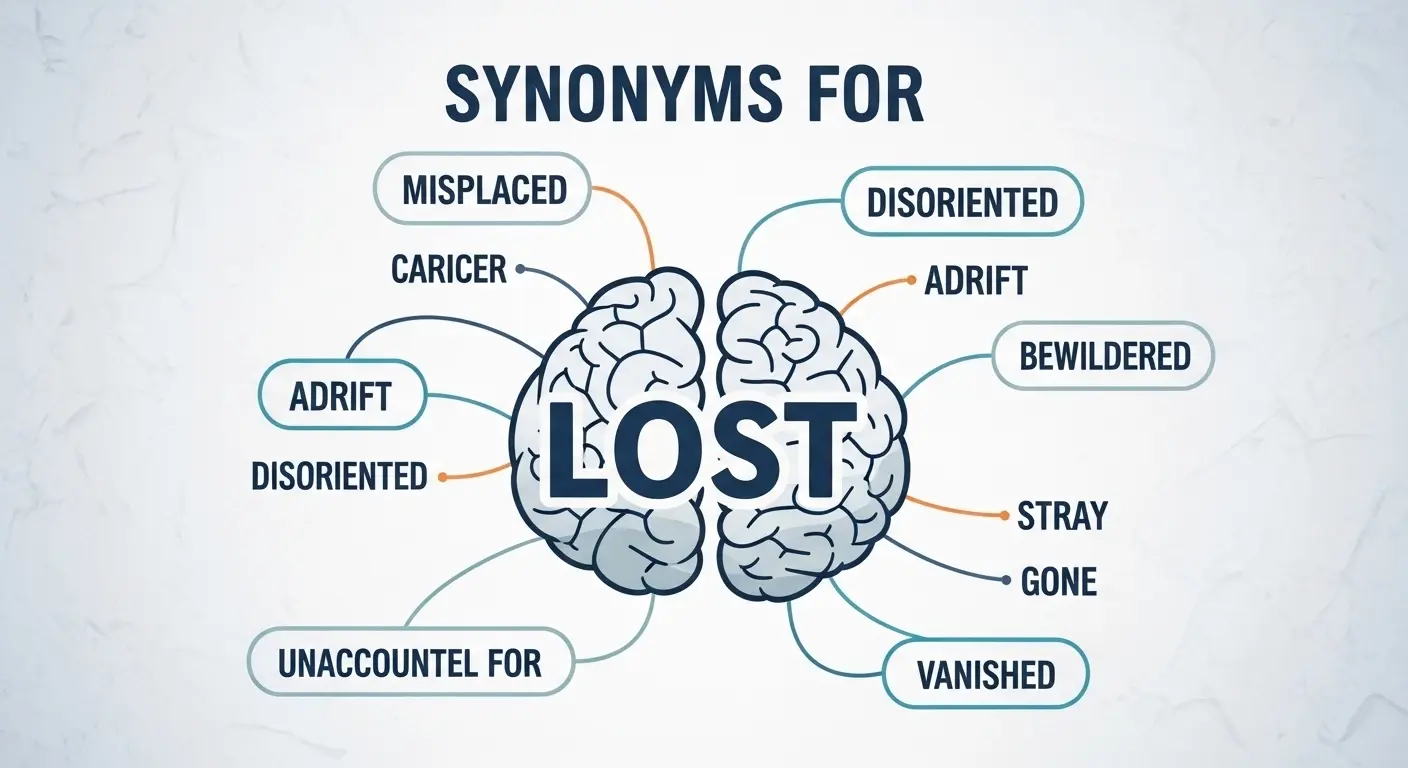
Learning synonyms for “lost” is very useful. It helps students improve writing, bloggers create engaging content, and everyday English users express feelings more clearly.
Synonyms List for Lost (30 Words)
1. Misplaced
- Meaning: Put something in the wrong place
- Explanation: You cannot find it because it’s not where it should be
- Examples:
- I misplaced my keys this morning.
- She misplaced her notebook at school.
2. Missing
- Meaning: Not found or absent
- Explanation: Something expected is not there
- Examples:
- My wallet is missing.
- One page is missing from the book.
3. Gone
- Meaning: No longer there
- Explanation: Something has disappeared
- Examples:
- My phone is gone!
- The money is gone from my bag.
4. Displaced
- Meaning: Moved from original place
- Explanation: Not in its usual position
- Examples:
- The files were displaced during shifting.
- Books got displaced on the shelf.
5. Confused
- Meaning: Unable to understand
- Explanation: Feeling mentally lost
- Examples:
- I feel confused in math class.
- She looked confused after the lecture.
6. Bewildered
- Meaning: Very confused
- Explanation: Cannot think clearly
- Examples:
- He felt bewildered in the crowd.
- I was bewildered by the instructions.
7. Disoriented
- Meaning: Not sure of direction
- Explanation: Feeling lost physically or mentally
- Examples:
- I felt disoriented in the new city.
- The child was disoriented in the mall.
8. Strayed
- Meaning: Moved away from path
- Explanation: Left the correct direction
- Examples:
- The dog strayed from home.
- He strayed off the road.
9. Astray
- Meaning: Away from the right path
- Explanation: Lost direction
- Examples:
- The child went astray.
- The plan went astray.
10. Wandering
- Meaning: Moving without direction
- Explanation: Not knowing where to go
- Examples:
- He was wandering in the streets.
- She kept wandering in the forest.
11. Aimless
- Meaning: Without purpose
- Explanation: No clear direction or goal
- Examples:
- He walked aimlessly.
- She felt aimless in life.
12. Adrift
- Meaning: Without direction or control
- Explanation: Floating or lost emotionally
- Examples:
- He felt adrift after losing his job.
- The boat was adrift in the sea.
13. Forgotten
- Meaning: Not remembered
- Explanation: Left out of memory
- Examples:
- I forgot my homework.
- The old building is forgotten.
14. Vanished
- Meaning: Disappeared suddenly
- Explanation: Gone quickly
- Examples:
- The cat vanished.
- My pen vanished from the desk.
15. Gone Missing
- Meaning: Cannot be found
- Explanation: Suddenly lost
- Examples:
- The files have gone missing.
- His bag went missing at the station.
16. Absent
- Meaning: Not present
- Explanation: Missing from a place
- Examples:
- He is absent today.
- The teacher noticed missing students.
17. Detached
- Meaning: Separated
- Explanation: Not connected anymore
- Examples:
- The button got detached.
- He felt detached from reality.
18. Gone Astray
- Meaning: Lost direction
- Explanation: Not following the right path
- Examples:
- The plan has gone astray.
- The child went astray in the park.
19. Untraceable
- Meaning: Cannot be found
- Explanation: No way to track it
- Examples:
- The item is untraceable.
- His phone became untraceable.
20. Irretrievable
- Meaning: Cannot be recovered
- Explanation: Lost forever
- Examples:
- The data is irretrievable.
- The chance was irretrievable.
21. Mislaid
- Meaning: Accidentally lost
- Explanation: Put somewhere and forgotten
- Examples:
- I mislaid my glasses.
- She mislaid her phone.
22. Stranded
- Meaning: Stuck without help
- Explanation: Unable to move or return
- Examples:
- We were stranded on the road.
- He got stranded in the city.
23. Helpless
- Meaning: Unable to act
- Explanation: Feeling lost emotionally
- Examples:
- She felt helpless without support.
- I felt helpless during the problem.
24. Directionless
- Meaning: Without direction
- Explanation: Not knowing where to go
- Examples:
- He lived a directionless life.
- The project became directionless.
25. Out of Place
- Meaning: Not in the right location
- Explanation: Feeling lost or unusual
- Examples:
- I felt out of place at the party.
- The item looked out of place.
26. Misguided
- Meaning: Led in wrong direction
- Explanation: Incorrect thinking or path
- Examples:
- His decision was misguided.
- She followed misguided advice.
27. Distracted
- Meaning: Not focused
- Explanation: Mind is lost elsewhere
- Examples:
- I felt distracted in class.
- He was distracted by noise.
28. Off Track
- Meaning: Not following plan
- Explanation: Lost direction
- Examples:
- The project went off track.
- He got off track in studies.
29. Uncertain
- Meaning: Not sure
- Explanation: Feeling lost in decisions
- Examples:
- I feel uncertain about my future.
- She was uncertain what to do.
30. Puzzled
- Meaning: Confused
- Explanation: Unable to understand
- Examples:
- I felt puzzled by the question.
- He looked puzzled.
Conclusion
In conclusion, understanding synonyms for “lost” helps you express ideas with more clarity and emotion in your writing. Whether you want to describe feeling confused, misplaced, defeated, or disconnected, choosing the right word can make your message stronger and more relatable.
Words like “misplaced,” “bewildered,” “vanished,” or “astray” each carry a slightly different tone, allowing you to match your context perfectly. Expanding your vocabulary not only improves communication but also adds depth and creativity to your content. So, instead of repeating the same word, explore these alternatives to make your writing more engaging, precise, and impactful for your readers in 2026 and beyond.

I am Johnny Lee is a passionate writer and language enthusiast dedicated to making English grammar simple, practical, and easy to understand. Through grameases.com, he helps learners improve their English skills with clear explanations.