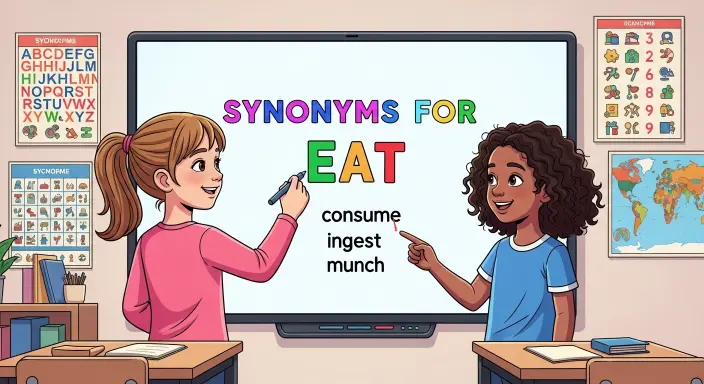
Have you ever found yourself saying “eat” again and again while writing or speaking English? It can make your language sound repetitive and less interesting. That’s why learning synonyms for eat is so useful for students, bloggers, and content writers.
Before we dive in, let’s quickly understand the word punctual. Punctual means “on time.” For example, “He arrives at school on time every day.” It is simple and easy English (Hemingway Grade 3).
Now, back to our topic food and eating words! Imagine a student writing: “I eat breakfast, I eat lunch, I eat dinner.
” Sounds boring, right? But if we use different words like devour, nibble, or feast, the writing becomes more powerful and engaging.
That’s why learning synonyms for eat helps improve writing, vocabulary, and communication skills.
Synonyms List (30 Powerful Words)
1. Consume
- Meaning: To take food or drink into the body.
- Explanation: A formal way of saying “eat.”
- Examples:
- Humans consume food for energy.
- He consumes a healthy breakfast daily.
2. Devour
- Meaning: To eat quickly and eagerly.
- Explanation: Used when someone eats with great hunger.
- Examples:
- He devoured the pizza in minutes.
- The child devoured the cake happily.
3. Ingest
- Meaning: To take food or drink inside the body.
- Explanation: Scientific or medical word for eating.
- Examples:
- We ingest vitamins through food.
- He ingested too much sugar.
4. Munch
- Meaning: To chew food slowly and steadily.
- Explanation: Casual eating style.
- Examples:
- She munched on chips.
- They munched apples in the park.
5. Nibble
- Meaning: To eat small bites.
- Explanation: Light eating action.
- Examples:
- The mouse nibbled cheese.
- She nibbled a cookie.
6. Bite
- Meaning: To cut food using teeth.
- Explanation: Basic eating action.
- Examples:
- He bit the sandwich.
- She bit into the fruit.
7. Gobble
- Meaning: To eat very fast.
- Explanation: Noisy eating style.
- Examples:
- He gobbled lunch quickly.
- The kids gobbled candy.
8. Gulp
- Meaning: To swallow food or drink quickly.
- Explanation: Fast swallowing action.
- Examples:
- She gulped juice.
- He gulped water.
9. Feast
- Meaning: To eat a large meal.
- Explanation: Eating in celebration.
- Examples:
- They feasted at the wedding.
- We feasted during Eid.
10. Dine
- Meaning: To eat a formal meal.
- Explanation: Polite or restaurant eating.
- Examples:
- They dined at a hotel.
- We dined together.
11. Partake
- Meaning: To join in eating.
- Explanation: Formal sharing food.
- Examples:
- He partook in dinner.
- They partook of the meal.
12. Nosh
- Meaning: To snack casually.
- Explanation: Informal eating.
- Examples:
- We noshed on popcorn.
- She noshed during movie.
13. Snack
- Meaning: To eat a small amount.
- Explanation: Light eating between meals.
- Examples:
- He snacks at night.
- They snacked on fruit.
14. Feed
- Meaning: To give or take food.
- Explanation: General eating word.
- Examples:
- The mother feeds the baby.
- Birds feed in the morning.
15. Wolf down
- Meaning: To eat very fast.
- Explanation: Informal hungry eating.
- Examples:
- He wolfed down pizza.
- She wolfed down dinner.
16. Polish off
- Meaning: To finish all food.
- Explanation: Eat completely.
- Examples:
- He polished off the meal.
- They polished off cake.
17. Savour
- Meaning: To enjoy food slowly.
- Explanation: Eating with pleasure.
- Examples:
- She savoured every bite.
- He savoured dessert.
18. Chew
- Meaning: To grind food with teeth.
- Explanation: Basic eating process.
- Examples:
- Chew your food well.
- He chewed slowly.
19. Chomp
- Meaning: To bite loudly.
- Explanation: Strong chewing action.
- Examples:
- He chomped carrots.
- She chomped sandwich.
20. Gorge
- Meaning: To eat too much.
- Explanation: Overeating food.
- Examples:
- He gorged on sweets.
- They gorged at party.
21. Breakfast (verb)
- Meaning: To eat breakfast.
- Explanation: Morning eating.
- Examples:
- We breakfast early.
- She breakfasted at 8.
22. Lunch (verb)
- Meaning: To eat lunch.
- Explanation: Midday meal.
- Examples:
- They lunched together.
- He lunched at work.
23. Supper (verb)
- Meaning: To eat dinner.
- Explanation: Evening meal.
- Examples:
- We supper early.
- She suppers with family.
24. Relish
- Meaning: To enjoy food greatly.
- Explanation: Happy eating.
- Examples:
- He relished meal.
- She relished dessert.
25. Peck
- Meaning: To eat small bits.
- Explanation: Bird-like eating.
- Examples:
- She pecked food.
- He pecked snacks.
26. Pick at
- Meaning: To eat slowly without interest.
- Explanation: Low appetite eating.
- Examples:
- She picked at dinner.
- He picked at salad.
27. Feast on
- Meaning: To enjoy a big meal.
- Explanation: Happy eating.
- Examples:
- They feasted on chicken.
- We feasted on sweets.
28. Bite into
- Meaning: To start eating by biting.
- Explanation: First bite action.
- Examples:
- He bit into an apple.
- She bit into bread.
29. Feed on
- Meaning: To eat regularly.
- Explanation: Habitual eating (animals mostly).
- Examples:
- Birds feed on seeds.
- Cats feed on fish.
30. Chow down
- Meaning: To eat quickly and heavily.
- Explanation: Informal fast eating.
- Examples:
- He chowed down on the burger.
- They chowed down pizza.
Conclusion
Learning synonyms for eat is one of the easiest ways to improve your English vocabulary and writing skills. Instead of repeating the same word again and again, you can use expressive alternatives like devour, nibble, feast, or savor. This makes your writing more natural, engaging, and professional. For students, these words improve essay writing and exam answers. For bloggers and SEO writers, they help create high-quality, readable content. For daily English speakers, they make communication more interesting and fluent.
Just like learning a synonym for punctual helps you talk about time in different ways, learning action verbs like these helps you express food-related ideas more clearly.
The best way to master these words is practice. Try using them in sentences, emails, or short paragraphs every day. The more you use them, the more natural they will become in your speech and writing.
Vocabulary growth is a step-by-step journey. Keep learning, keep practicing, and your English will become stronger and more confident over time.

I am Johnny Lee is a passionate writer and language enthusiast dedicated to making English grammar simple, practical, and easy to understand. Through grameases.com, he helps learners improve their English skills with clear explanations.