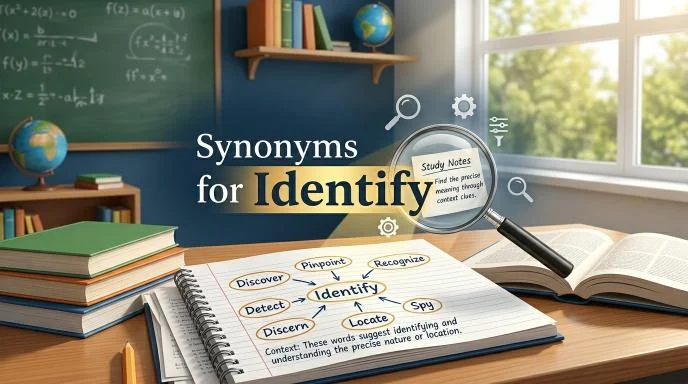
Have you ever tried to explain something in writing but kept repeating the word “identify” again and again? Maybe you were writing an essay, blog post, school assignment, or even an email.
Using the same word too many times can make writing sound boring and repetitive. Imagine a student working on a science project. He writes, “Scientists identify plants by their leaves.” Then in the next line, he again writes “identify.” After a while, the paragraph feels dull.
This is where learning synonyms becomes helpful. The word “identify” means to recognize, discover, or name something correctly. In simple English, it means “to know what something is.”
Knowing synonyms for identify helps students, bloggers, writers, and English learners sound smarter and more natural. It also improves SEO writing, communication skills, and vocabulary. .
━━━━━━━━━━━━━━━━━━
1. Recognize
- Meaning: To know someone or something from before.
- Explanation: Used when you remember or notice something familiar.
Examples:
- I recognized my teacher at the mall.
- She quickly recognized the song on the radio.
━━━━━━━━━━━━━━━━━━
2. Detect
- Meaning: To discover something hidden or difficult to notice.
- Explanation: Often used for problems, smells, errors, or signals.
Examples:
- Doctors detected the illness early.
- The machine can detect smoke quickly.
━━━━━━━━━━━━━━━━━━
3. Discover
- Meaning: To find something for the first time.
- Explanation: Common in science, travel, and learning.
Examples:
- Scientists discovered a new planet.
- I discovered a useful app yesterday.
━━━━━━━━━━━━━━━━━━
4. Determine
- Meaning: To find out something clearly.
- Explanation: Often used after research or thinking carefully.
Examples:
- Police determined the cause of the accident.
- We must determine the best solution.
━━━━━━━━━━━━━━━━━━
5. Establish
- Meaning: To prove or confirm something.
- Explanation: Used when making something certain.
Examples:
- The test established his innocence.
- Researchers established the facts quickly.
━━━━━━━━━━━━━━━━━━
6. Verify
- Meaning: To check if something is true.
- Explanation: Common in online accounts and official documents.
Examples:
- Please verify your email address.
- The officer verified my identity card.
━━━━━━━━━━━━━━━━━━
7. Confirm
- Meaning: To say something is correct or true.
- Explanation: Used in meetings, bookings, or facts.
Examples:
- She confirmed the appointment.
- The news confirmed our fears.
━━━━━━━━━━━━━━━━━━
8. Pinpoint
- Meaning: To identify something exactly.
- Explanation: Used for precise locations or causes.
Examples:
- The doctor pinpointed the problem.
- Police pinpointed the suspect’s location.
━━━━━━━━━━━━━━━━━━
9. Diagnose
- Meaning: To identify a disease or problem.
- Explanation: Mostly used in medical situations.
Examples:
- The doctor diagnosed diabetes early.
- Mechanics diagnosed the engine problem.
━━━━━━━━━━━━━━━━━━
10. Name
- Meaning: To say what someone or something is called.
- Explanation: A simple and common synonym for identify.
Examples:
- Can you name this animal?
- She named her puppy Max.
━━━━━━━━━━━━━━━━━━
11. Classify
- Meaning: To group things into categories.
- Explanation: Often used in science and education.
Examples:
- Scientists classify animals into groups.
- The files were classified carefully.
━━━━━━━━━━━━━━━━━━
12. Distinguish
- Meaning: To notice differences between things.
- Explanation: Used when comparing similar items.
Examples:
- It is hard to distinguish twins.
- Can you distinguish fact from opinion?
━━━━━━━━━━━━━━━━━━
13. Spot
- Meaning: To notice something quickly.
- Explanation: Informal and commonly used in conversation.
Examples:
- I spotted my friend in the crowd.
- She spotted a mistake in the report.
━━━━━━━━━━━━━━━━━━
14. Notice
- Meaning: To become aware of something.
- Explanation: Used for small details or changes.
Examples:
- Did you notice the new painting?
- He noticed her smile immediately.
━━━━━━━━━━━━━━━━━━
15. Observe
- Meaning: To watch carefully.
- Explanation: Common in studies and investigations.
Examples:
- Scientists observed animal behavior.
- She observed the children playing.
━━━━━━━━━━━━━━━━━━
16. Locate
- Meaning: To find the exact position of something.
- Explanation: Used for places, objects, or people.
Examples:
- Rescue teams located the missing hikers.
- I located my keys under the sofa.
━━━━━━━━━━━━━━━━━━
17. Find
- Meaning: To discover or see something.
- Explanation: One of the simplest synonyms for identify.
Examples:
- I found my wallet yesterday.
- She found the answer online.
━━━━━━━━━━━━━━━━━━
18. Uncover
- Meaning: To reveal something hidden.
- Explanation: Often used in investigations or news.
Examples:
- Reporters uncovered corruption.
- The study uncovered surprising facts.
━━━━━━━━━━━━━━━━━━
19. Reveal
- Meaning: To make something known.
- Explanation: Used for secrets or information.
Examples:
- She revealed the truth finally.
- The report revealed serious issues.
━━━━━━━━━━━━━━━━━━
20. Ascertain
- Meaning: To learn something with certainty.
- Explanation: A formal synonym for identify.
Examples:
- Police ascertained the facts.
- We must ascertain the cause first.
━━━━━━━━━━━━━━━━━━
21. Authenticate
- Meaning: To prove something is real.
- Explanation: Used for documents, art, or accounts.
Examples:
- Experts authenticated the painting.
- The app authenticated my login.
━━━━━━━━━━━━━━━━━━
22. Label
- Meaning: To identify something with a tag or name.
- Explanation: Common in schools, shops, and offices.
Examples:
- Please label the boxes clearly.
- The teacher labeled the folders.
━━━━━━━━━━━━━━━━━━
23. Mark
- Meaning: To show or identify something clearly.
- Explanation: Used for signs, lines, or symbols.
Examples:
- He marked the correct answer.
- The map marked dangerous areas.
━━━━━━━━━━━━━━━━━━
24. Point Out
- Meaning: To show or mention something clearly.
- Explanation: Common in everyday English.
Examples:
- She pointed out my mistake politely.
- The guide pointed out famous buildings.
━━━━━━━━━━━━━━━━━━
25. Characterize
- Meaning: To describe the qualities of something.
- Explanation: Often used in writing and analysis.
Examples:
- The movie characterizes modern society well.
- Honesty characterizes a good leader.
━━━━━━━━━━━━━━━━━━
26. Profile
- Meaning: To analyze or describe someone.
- Explanation: Common in police work or media.
Examples:
- Detectives profiled the suspect.
- The magazine profiled a young artist.
━━━━━━━━━━━━━━━━━━
27. Trace
- Meaning: To track the origin of something.
- Explanation: Used in history, crime, or research.
Examples:
- Police traced the phone call.
- Scientists traced the virus source.
━━━━━━━━━━━━━━━━━━
28. Differentiate
- Meaning: To tell the difference between things.
- Explanation: Similar to distinguish.
Examples:
- Children learn to differentiate colors.
- It is difficult to differentiate the brands.
━━━━━━━━━━━━━━━━━━
29. Single Out
- Meaning: To identify one person or thing from many.
- Explanation: Used when choosing or noticing one specifically.
Examples:
- The coach singled out the best player.
- She singled out the main issue quickly.
━━━━━━━━━━━━━━━━━━
30. Match
- Meaning: To identify by comparing similarities.
- Explanation: Often used with fingerprints or photos.
Examples:
- Police matched the fingerprints.
- I matched the shoes with my dress.
━━━━━━━━━━━━━━━━━━
Conclusion
Learning synonyms for identity can make your English stronger, clearer, and more professional. Whether you are a student writing essays, a blogger creating SEO articles, or someone improving daily communication, these vocabulary words help you avoid repetition and sound more natural.
Using different words like “recognize,” “detect,” “discover,” and “verify” can improve readability and make your writing more engaging. These words are also useful in emails, reports, social media posts, and business communication.
Practice using one new synonym each day in conversations, school assignments, or blog articles. Over time, your vocabulary will grow, and your confidence in English writing will improve too.

I am Napoleon Hill is a motivational writer and content creator at Grameases.com, inspired by the timeless success principles taught by Napoleon Hill. His writing focuses on mindset, self-development, clear thinking, and practical life lessons explained in simple language.