Have you ever finished writing an essay, blog post, report, or email and suddenly felt stuck at the end? You know what to say, but you keep repeating the word “conclusion” again and again.
This is a very common problem for students, bloggers, and content writers. Repetition makes writing look weak, while strong vocabulary makes it more professional and engaging.
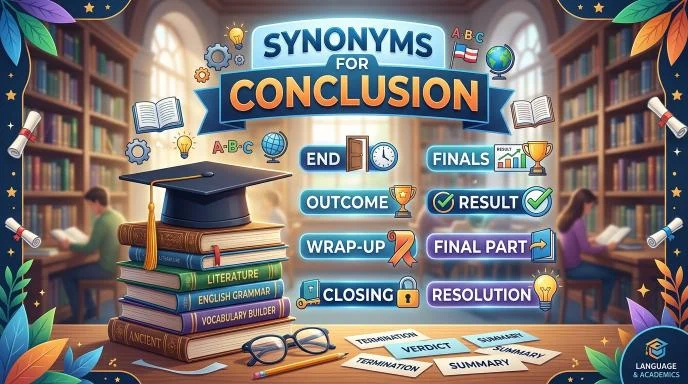
That is where synonyms for conclusion become extremely useful. Instead of ending every paragraph or article with the same word, you can use different expressions like summary.
Ending, wrap-up, or final thoughts to make your writing more natural and attractive. In simple English, a conclusion means the final part of something where everything is finished or summarized. It is the last section of an essay, story, report, or speech.
For example, imagine a student working hard on a school assignment. Everything is perfect, but the ending is weak because the same word is repeated. A strong vocabulary helps improve that final impression.
Synonyms for Conclusion (30 Powerful Words with Meanings & Examples)
1. Ending
- Meaning: The final part of something.
- Explanation: Used when something finishes completely.
- Examples:
- The ending of the story was emotional.
- I liked the ending of your essay because it was clear.
2. Finish
- Meaning: The last part or completion.
- Explanation: Shows that something has been completed.
- Examples:
- The finish of the report was strong.
- We need a better finish to this article.
3. Closing
- Meaning: The final part before something stops.
- Explanation: Common in speeches and formal writing.
- Examples:
- The closing of the speech was powerful.
- Her closing words inspired everyone.
4. Wrap-up
- Meaning: A short summary at the end.
- Explanation: Used for quick final explanation.
- Examples:
- Here is a quick wrap-up of the lesson.
- The wrap-up made everything easy to understand.
5. Summary
- Meaning: A short version of main points.
- Explanation: Covers all important ideas briefly.
- Examples:
- The summary explains the whole topic.
- I wrote a summary of the chapter.
6. Recap
- Meaning: A short review of main points.
- Explanation: Used to repeat key ideas.
- Examples:
- Let’s do a quick recap of the lecture.
- The recap helped students remember everything.
7. Final Part
- Meaning: The last section of something.
- Explanation: Direct way to show ending.
- Examples:
- The final part of the movie was exciting.
- This is the final part of the assignment.
8. Epilogue
- Meaning: A final section in a story or book.
- Explanation: Used in literature to explain ending.
- Examples:
- The epilogue gave extra information.
- I enjoyed the book’s epilogue.
9. Afterword
- Meaning: A note at the end of a book.
- Explanation: Written by the author after completion.
- Examples:
- The author added an afterword.
- The afterword explained the story better.
10. Finale
- Meaning: The final and most important part.
- Explanation: Often used in shows or events.
- Examples:
- The finale was full of excitement.
- Everyone enjoyed the series finale.
11. Termination
- Meaning: The act of ending something formally.
- Explanation: Very formal word for ending.
- Examples:
- The termination of the project was unexpected.
- Contract termination was necessary.
12. Completion
- Meaning: The state of being finished.
- Explanation: Shows full completion of work.
- Examples:
- Completion of the task took hours.
- The project reached completion successfully.
13. Culmination
- Meaning: The highest or final point.
- Explanation: Used for important or big endings.
- Examples:
- The event was the culmination of hard work.
- Her success is the culmination of years of effort.
14. Resolution
- Meaning: Final decision or ending.
- Explanation: Often used in stories or problems.
- Examples:
- The resolution of the story was happy.
- We reached a resolution after discussion.
15. Denouement
- Meaning: Final part of a story where everything is explained.
- Explanation: Literary word for story ending.
- Examples:
- The denouement clarified the mystery.
- I liked the dramatic denouement.
16. Close
- Meaning: The end of something.
- Explanation: Simple and common word.
- Examples:
- The meeting came to a close.
- At the close of the day, we left.
17. Finish Line
- Meaning: Final point of completion.
- Explanation: Used in races or competitions.
- Examples:
- He crossed the finish line first.
- The finish line was near.
18. Last Part
- Meaning: Final section.
- Explanation: Simple structural term.
- Examples:
- The last part was very interesting.
- I read the last part carefully.
19. Final Stage
- Meaning: The last phase of a process.
- Explanation: Used in step-by-step work.
- Examples:
- We are in the final stage of the project.
- The final stage is almost complete.
20. Closing Stage
- Meaning: The ending phase.
- Explanation: Formal process ending.
- Examples:
- The closing stage went smoothly.
- We entered the closing stage of planning.
21. End Result
- Meaning: Final outcome.
- Explanation: What happens in the end.
- Examples:
- The end result was successful.
- I liked the end result of the project.
22. Outcome
- Meaning: Final result of something.
- Explanation: Neutral word for result.
- Examples:
- The outcome was unexpected.
- We discussed the outcome of the meeting.
23. Final Words
- Meaning: Last spoken or written part.
- Explanation: Used in speeches or writing.
- Examples:
- His final words were inspiring.
- She gave final words of advice.
24. Summing Up
- Meaning: Brief conclusion.
- Explanation: Informal way to close topic.
- Examples:
- Summing up, the lesson was useful.
- He is summing up the report.
25. Final Thought
- Meaning: Last idea or opinion.
- Explanation: Personal ending statement.
- Examples:
- My final thought is simple.
- He shared a final thought on the topic.
26. Last Section
- Meaning: Final part of text.
- Explanation: Structural writing term.
- Examples:
- The last section is very important.
- I carefully read the last section.
27. Wind-Up
- Meaning: Informal ending or closure.
- Explanation: Often used in speeches or talks.
- Examples:
- The wind-up was funny and simple.
- Let’s wind up the discussion now.
28. Final Segment
- Meaning: Last portion of something.
- Explanation: Used in episodes or parts.
- Examples:
- The final segment was exciting.
- We watched the final segment today.
29. Closing Remarks
- Meaning: Final comments or statements.
- Explanation: Common in speeches or meetings.
- Examples:
- The teacher gave closing remarks.
- His closing remarks were powerful.
30. Epilogue Section
- Meaning: Final literary section.
- Explanation: Extra ending in books or stories.
- Examples:
- The epilogue section was emotional.
- I enjoyed the epilogue section.
Conclusion
Understanding and using synonyms for conclusion is a powerful way to improve your English writing skills. Instead of repeating the same word again and again, you can choose from many alternatives like ending, summary, wrap-up, finale, or final thoughts. This makes your writing more natural, professional, and engaging.
For students, these words are very helpful in essays, exams, and assignments. They help create a strong impression on teachers by showing better vocabulary skills. For bloggers and content writers, using different synonyms improves SEO, readability, and audience engagement. Readers enjoy content more when it feels fresh and varied instead of repetitive.
In daily life, these words also help in emails, reports, presentations, and communication. A simple change in vocabulary can make your message clearer and more impactful.

I am Harper L. James is a writer at Grameases.com, focusing on English grammar, similes, metaphors, and simple explanations that make learning English easy and practical.