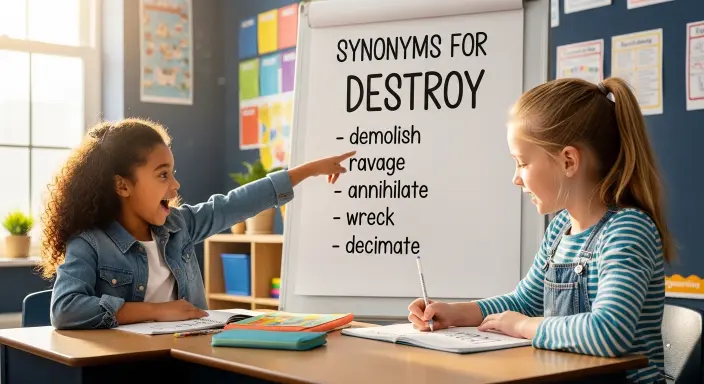
Have you ever written the same word again and again in an essay or blog post? Many writers use the word destroy too often. This can make writing sound boring and repetitive.
Imagine writing, “The storm destroyed the house. The fire destroyed the trees. Anger destroyed the friendship.” It works but it does not sound strong or professional.
The word destroy means to damage something so badly that it cannot be used again. It can also mean ending something completely, like hope, trust, or plans.
Learning synonyms for destroy helps students, bloggers, content writers, and daily English users make their writing richer and clearer. Instead of using one word repeatedly, you can choose better options like ruin, demolish, wreck, or shatter.
In this guide, you will learn 30 useful synonyms for destroy with meanings, explanations, and examples.
1. Ruin
- Meaning: To badly damage something.
- Explanation: Often used for plans, buildings, or reputation.
Examples:
- Heavy rain ruined our picnic.
- Lies ruined his good name.
2. Demolish
- Meaning: To tear down completely.
- Explanation: Mostly used for buildings.
Examples:
- Workers demolished the old house.
- The city demolished unsafe shops.
3. Wreck
- Meaning: To badly damage something.
- Explanation: Common for cars or objects.
Examples:
- The crash wrecked the car.
- The storm wrecked many boats.
4. Shatter
- Meaning: To break into pieces.
- Explanation: Also used for feelings or dreams.
Examples:
- The glass shattered on the floor.
- The news shattered her hopes.
5. Smash
- Meaning: To break with force.
- Explanation: Strong physical damage word.
Examples:
- He smashed the plate.
- Waves smashed the fence.
6. Crush
- Meaning: To press and break.
- Explanation: Used for objects or emotions.
Examples:
- The box crushed the flowers.
- Failure crushed his confidence.
7. Break
- Meaning: To separate into pieces.
- Explanation: Common everyday word.
Examples:
- She broke the cup.
- The toy broke easily.
8. Damage
- Meaning: To harm something.
- Explanation: Less severe than destroy.
Examples:
- Rain damaged the roof.
- Smoke damaged the walls.
9. Devastate
- Meaning: To destroy badly.
- Explanation: Often used for disasters.
Examples:
- Floods devastated the village.
- War devastated the country.
10. Annihilate
- Meaning: To destroy completely.
- Explanation: Very strong formal word.
Examples:
- The army annihilated the enemy base.
- Fire annihilated the forest.
11. Obliterate
- Meaning: To wipe out fully.
- Explanation: Leaves nothing behind.
Examples:
- The blast obliterated the wall.
- Records were obliterated in the fire.
12. Eradicate
- Meaning: To remove completely.
- Explanation: Used for disease or problems.
Examples:
- Doctors aim to eradicate malaria.
- We must eradicate corruption.
13. Eliminate
- Meaning: To remove or end.
- Explanation: Used for competition or issues.
Examples:
- The team was eliminated early.
- We need to eliminate waste.
14. Terminate
- Meaning: To end something.
- Explanation: Formal usage.
Examples:
- They terminated the contract.
- The company terminated service.
15. Undo
- Meaning: To ruin past progress.
- Explanation: Often emotional or plan-based.
Examples:
- One mistake undid months of work.
- His anger undid everything.
16. Collapse
- Meaning: To fall down suddenly.
- Explanation: Buildings or systems.
Examples:
- The roof collapsed.
- The business collapsed quickly.
17. Topple
- Meaning: To knock over.
- Explanation: Used for objects or governments.
Examples:
- Wind toppled the tree.
- Protesters toppled the ruler.
18. Sink
- Meaning: To go down underwater.
- Explanation: Ships or plans failing.
Examples:
- The storm sank the boat.
- Debt sank the company.
19. Burn
- Meaning: To destroy by fire.
- Explanation: Common word.
Examples:
- Flames burned the barn.
- He burned old papers.
20. Torch
- Meaning: To set on fire.
- Explanation: Informal but strong.
Examples:
- Rioters torched cars.
- Someone torched the shed.
21. Dismantle
- Meaning: To take apart.
- Explanation: Machines or systems.
Examples:
- Workers dismantled the bridge.
- They dismantled the network.
22. Tear Down
- Meaning: To pull down.
- Explanation: Buildings or ideas.
Examples:
- They tore down the wall.
- Critics tore down his plan.
23. Sabotage
- Meaning: To deliberately damage.
- Explanation: Secret harmful action.
Examples:
- Someone sabotaged the engine.
- Jealousy sabotaged the project.
24. Corrupt
- Meaning: To spoil morally.
- Explanation: Used for values or data.
Examples:
- Power corrupted him.
- The file was corrupted.
25. Poison
- Meaning: To harm badly.
- Explanation: Also relationships.
Examples:
- Chemicals poisoned the river.
- Hate poisoned their friendship.
26. Spoil
- Meaning: To make worse.
- Explanation: Mild form of destroy.
Examples:
- Rain spoiled the match.
- Anger spoiled the mood.
27. Deface
- Meaning: To ruin appearance.
- Explanation: Walls, statues, property.
Examples:
- Vandals defaced the statue.
- The sign was defaced.
28. Ravage
- Meaning: To badly damage.
- Explanation: Nature or war contexts.
Examples:
- Fire ravaged the town.
- Disease ravaged crops.
29. Pulverize
- Meaning: To crush into powder.
- Explanation: Very strong word.
Examples:
- Machines pulverized the rocks.
- The blow pulverized the box.
30. Shred
- Meaning: To tear into small pieces.
- Explanation: Paper, cloth, or reputation.
Examples:
- She shredded old letters.
- Critics shredded the movie.
Conclusion
Learning synonyms for destroy is a smart way to improve your English vocabulary and writing style. Instead of repeating the same word, you can choose stronger and clearer words like ruin, demolish, wreck, devastate, or obliterate depending on the situation. This helps students write better essays, bloggers create engaging posts, and professionals write stronger emails or reports. Good vocabulary also improves speaking confidence in daily life.
Start practicing these words today. Use them in sentences, school homework, blog articles, or conversations. The more you use them, the more natural they will feel. Synonyms for Damage, Synonyms for Break, English Vocabulary Tips.

I am Johnny Lee is a passionate writer and language enthusiast dedicated to making English grammar simple, practical, and easy to understand. Through grameases.com, he helps learners improve their English skills with clear explanations.