Have you ever been in a conversation where someone shared facts or advice that amazed you? Maybe it was a friend who knew all about history or a colleague who explained technology clearly. That feeling of respect and trust comes from knowing someone is knowledgeable.
Being knowledgeable means having information, understanding, or skill in a subject. In simple English: it’s “knowing a lot about something”. Just like being punctual, showing up on time being knowledgeable shows reliability and preparation.
Imagine a student who always gives smart answers in class or a blogger who writes accurate articles. Their words carry more weight because they know their stuff.
Learning synonyms of knowledgeable helps students, bloggers, content writers, and everyday English users express ideas better, avoid repetition, and sound more professional in emails, essays, or posts.
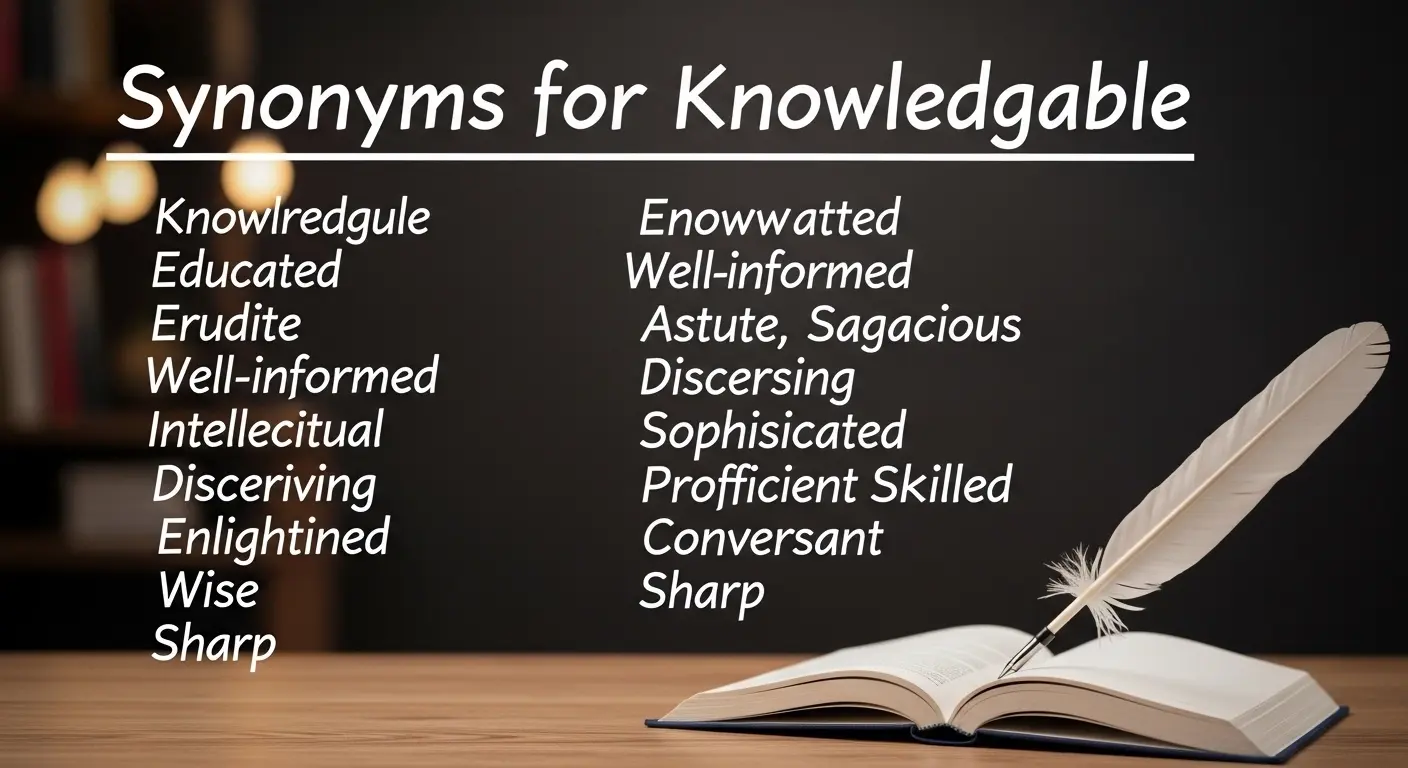
Synonyms of Knowledgeable (30 Items)
Here’s a helpful list of synonyms with simple meanings and examples.
1. Informed
Meaning: Having a lot of information.
Examples:
- She is always well-informed about world news.
- Being informed helps you make better decisions.
2. Educated
Meaning: Having studied or learned a lot.
Examples:
- He is an educated man who reads widely.
- Educated people often share useful knowledge.
3. Well-read
Meaning: Having read many books and articles.
Examples:
- She is well-read in literature and history.
- Well-read students can discuss many topics easily.
4. Expert
Meaning: Very skilled or knowledgeable in a subject.
Examples:
- The expert gave a clear explanation of climate change.
- Consult an expert when you need detailed advice.
5. Learned
Meaning: Having a lot of academic knowledge.
Examples:
- He is a learned professor of philosophy.
- Learned people often inspire others with their knowledge.
6. Wise
Meaning: Having good judgment and experience.
Examples:
- The wise teacher advised us to be patient.
- Wise decisions are based on knowledge and experience.
7. Savvy
Meaning: Knowing how things work in practice.
Examples:
- She is tech-savvy and fixes computers easily.
- Business-savvy people make smart investments.
8. Skilled
Meaning: Able to do something well.
Examples:
- Skilled writers can explain complex topics simply.
- Skilled workers are valued in every industry.
9. Competent
Meaning: Having the necessary ability.
Examples:
- He is competent in both English and French.
- Competent employees deliver tasks on time.
10. Sharp
Meaning: Quick to understand or learn.
Examples:
- She is sharp and learns languages fast.
- Sharp minds solve problems efficiently.
11. Astute
Meaning: Good at noticing and understanding things.
Examples:
- An astute observer spots hidden patterns.
- Astute managers make wise choices.
12. Bright
Meaning: Intelligent and quick to learn.
Examples:
- The bright student answered all questions correctly.
- Bright children often enjoy puzzles and reading.
13. Clever
Meaning: Smart in a practical way.
Examples:
- He is clever and solves tricky problems fast.
- Clever ideas make life easier.
14. Brainy
Meaning: Very intelligent.
Examples:
- The brainy girl won the science competition.
- Brainy people often think creatively.
15. Skilled-informant
Meaning: Experienced and knowledgeable in details.
Examples:
- The skilled-informant advised on local customs.
- Skilled-informants help newcomers learn quickly.
16. Erudite
Meaning: Very educated and learned.
Examples:
- The erudite scholar published many books.
- Erudite discussions inspire curiosity in others.
17. Proficient
Meaning: Good at something through practice.
Examples:
- She is proficient in coding and design.
- Proficient students complete assignments efficiently.
18. Cognizant
Meaning: Knowing or aware of something.
Examples:
- Be cognizant of the rules before starting.
- He is cognizant of new trends in technology.
19. Literate
Meaning: Able to read, write, and understand.
Examples:
- The literate population improves social development.
- She is digitally literate and uses apps confidently.
20. Experienced
Meaning: Having done something many times.
Examples:
- Experienced teachers manage classrooms well.
- Experienced travelers know how to avoid problems.
21. Intellectual
Meaning: Relating to thinking and knowledge.
Examples:
- He is an intellectual who enjoys debates.
- Intellectual people like challenging questions.
22. Perceptive
Meaning: Quick to notice or understand things.
Examples:
- Perceptive critics give insightful reviews.
- Perceptive friends understand feelings without words.
23. Enlightened
Meaning: Having knowledge and wisdom.
Examples:
- Enlightened leaders guide people fairly.
- Enlightened individuals often encourage learning.
24. Observant
Meaning: Good at noticing details.
Examples:
- Observant students notice mistakes quickly.
- Observant travelers see hidden beauty in cities.
25. Analytical
Meaning: Good at understanding by examining details.
Examples:
- Analytical thinkers solve complex problems.
- She uses analytical skills in data analysis.
26. Thoughtful
Meaning: Careful and mindful in thinking.
Examples:
- Thoughtful answers impress teachers.
- Being thoughtful helps in writing and planning.
27. Intellectual-minded
Meaning: Interested in knowledge and ideas.
Examples:
- Intellectual-minded people enjoy reading debates.
- Intellectual-minded students explore diverse subjects.
28. Rational
Meaning: Logical and reasonable.
Examples:
- Rational thinkers avoid unnecessary risks.
- Rational discussions prevent misunderstandings.
29. Disciplined
Meaning: Focused and organized in learning.
Examples:
- Disciplined students study regularly.
- Disciplined habits improve knowledge retention.
30. Curious
Meaning: Wanting to learn or know more.
Examples:
- Curious minds ask many questions.
- Curious people explore new ideas constantly.
Conclusion
Learning synonyms for knowledgeable not only makes your writing rich and interesting but also helps in daily communication, blogging, and professional emails. When you replace “knowledgeable” with words like informed, expert, or well-read, your sentences become more engaging and precise.
Try practicing these synonyms in your essays, articles, or emails. Mix and match to describe people, ideas, or skills. Over time, you’ll notice your vocabulary becomes stronger, your writing more professional, and your confidence in English grows. Start small: pick one synonym a day and use it naturally in conversation or writing.

I am Johnny Lee is a passionate writer and language enthusiast dedicated to making English grammar simple, practical, and easy to understand. Through grameases.com, he helps learners improve their English skills with clear explanations.